
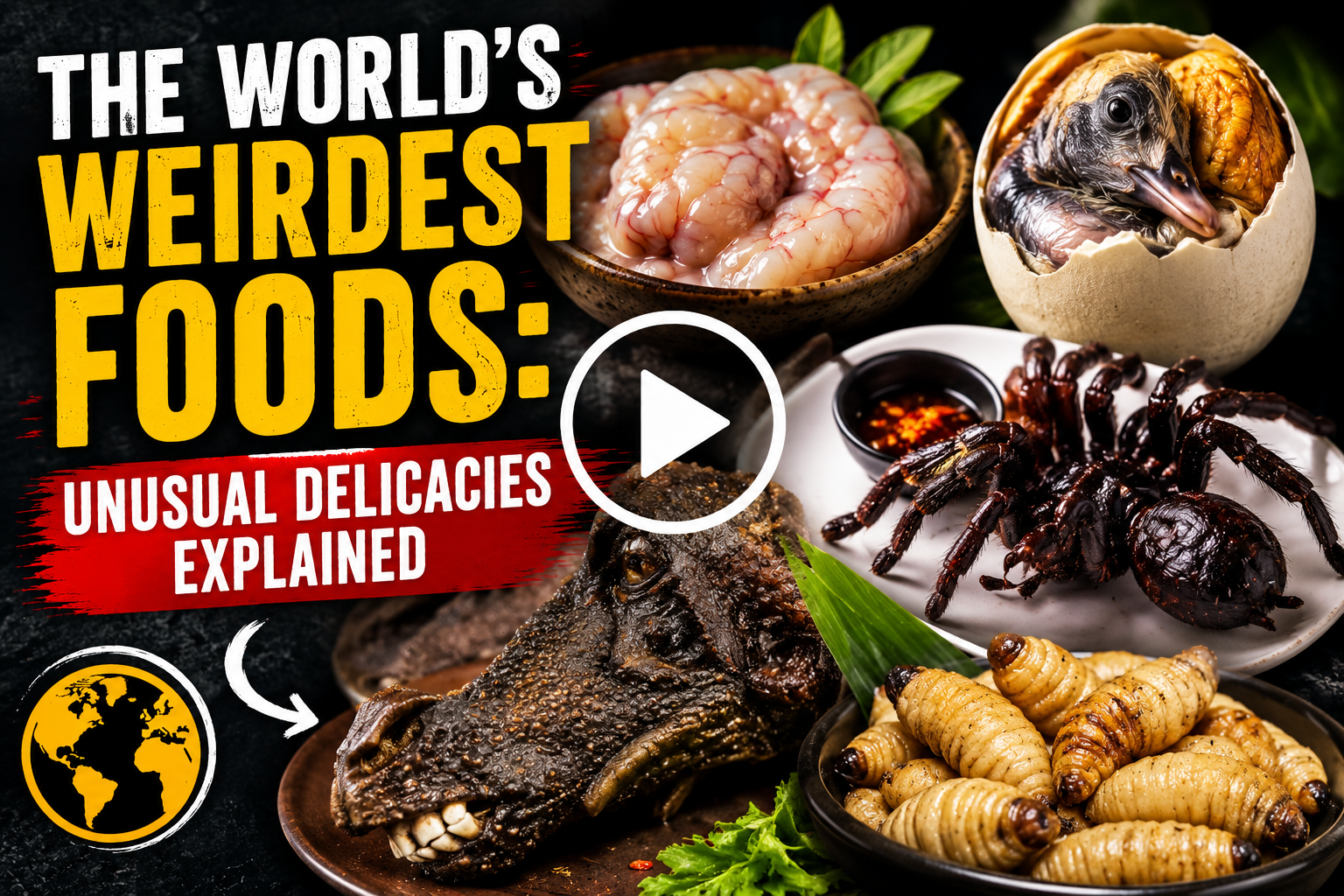
Food is one of the most fascinating ways to explore different cultures. What may seem completely normal in one country can appear unusual, shocking, or even unbelievable to visitors from another part of the world. Across the globe, people have developed unique culinary traditions shaped by geography, history, climate, and local ingredients.
From fermented fish and century-old eggs to insects and exotic delicacies, some foods challenge our perceptions of what is considered edible. Yet these dishes often hold deep cultural significance and are beloved by locals who have enjoyed them for generations.
In this article, we’ll explore some of the world’s weirdest foods, uncover their origins, and explain why millions of people consider these unusual dishes true delicacies.
Why Do Some Foods Seem Weird?
The idea of “weird food” is largely subjective.
For example:
- Cheese may seem unusual to someone who has never tasted dairy products.
- Eating insects may appear strange in some countries but is completely normal in others.
- Fermented foods can have strong odors that surprise first-time tasters.
Food preferences are deeply influenced by culture, tradition, and personal experience.
What one person considers bizarre, another may consider comfort food.
1. Century Eggs (China)
One of the most famous unusual foods in the world is the century egg.
Despite the name, these eggs are not actually 100 years old.
Century eggs are preserved for several weeks or months in a mixture of:
- Clay
- Ash
- Salt
- Lime
The process transforms the egg dramatically.
Appearance
- Dark green or black yolk
- Translucent, jelly-like egg white
Taste
The flavor is rich, creamy, and slightly sulfuric with strong umami notes.
Although their appearance can be intimidating, century eggs are highly valued in Chinese cuisine.
2. Hákarl (Iceland)
Hákarl is one of Iceland’s most notorious traditional foods.
It consists of fermented Greenland shark.
Fresh Greenland shark meat contains natural toxins and cannot be eaten immediately.
To make it safe:
- The shark is buried underground.
- It ferments for several months.
- It is then hung to dry.
Flavor
Many describe the aroma as extremely strong, resembling ammonia.
The taste is equally intense, making it a challenge for many first-time visitors.
Despite its reputation, Hákarl remains an important part of Icelandic heritage.
3. Casu Marzu (Italy)
Italy is famous for cheese, but Casu Marzu takes things to another level.
Originating in Sardinia, this cheese contains live insect larvae.
The larvae help break down the cheese, creating an exceptionally soft texture.
Why It’s Famous
The presence of live larvae makes Casu Marzu one of the most controversial foods in the world.
Taste
Fans describe it as:
- Rich
- Creamy
- Intensely flavorful
For adventurous food lovers, it’s considered a unique culinary experience.
4. Balut (Philippines)
Balut is a fertilized duck egg containing a partially developed embryo.
It is a popular street food throughout the Philippines.
How It’s Eaten
The egg is boiled and eaten directly from the shell.
Flavor
Many people compare the taste to:
- Rich chicken soup
- Hard-boiled egg
- Savory broth
While the appearance may surprise newcomers, Balut is widely enjoyed for its flavor and nutritional value.
5. Fried Tarantulas (Cambodia)
In Cambodia, fried tarantulas are a popular snack.
This unusual food became more common during periods of food scarcity and eventually evolved into a culinary tradition.
Preparation
The spiders are:
- Seasoned
- Fried until crispy
Taste
Many travelers report flavors similar to:
- Crab
- Shrimp
- Soft-shell seafood
Today, fried tarantulas are considered both a delicacy and a tourist attraction.
6. Escamoles (Mexico)
Often called “insect caviar,” Escamoles are edible ant larvae harvested from agave plants.
Why They’re Valuable
Harvesting them is labor-intensive, making them relatively expensive.
Texture and Flavor
Escamoles are often described as:
- Buttery
- Nutty
- Slightly cheesy
Served in tacos or traditional Mexican dishes, they are considered a gourmet delicacy.
7. Surströmming (Sweden)
Surströmming is fermented Baltic herring and is famous for having one of the strongest food odors in the world.
Preparation
The fish is lightly salted and fermented for months.
Reputation
Many people consider opening a can of Surströmming an unforgettable experience because of its powerful smell.
Taste
Fans say the flavor is much milder than the aroma suggests.
It remains a beloved traditional food in parts of Sweden.
8. Rocky Mountain Oysters (United States)
Despite the name, Rocky Mountain oysters are not seafood.
They are actually bull testicles.
Preparation
Typically:
- Breaded
- Fried
- Served with dipping sauce
Taste
Many compare them to:
- Fried calamari
- Chicken nuggets
This dish is especially popular in parts of the American West.
9. Sannakji (South Korea)
Sannakji consists of freshly prepared octopus served immediately after being cut.
The tentacles continue moving due to residual nerve activity.
Unique Experience
The movement creates a memorable dining experience.
Safety Note
Chewing thoroughly is important because the suction cups can still cling to surfaces.
The flavor itself is mild and fresh.
10. Bird’s Nest Soup (China)
Bird’s Nest Soup is one of the world’s most expensive delicacies.
The nests are made from hardened saliva produced by swiftlets.
Why It’s Valuable
Collecting the nests requires considerable effort and skill.
Texture
The nests develop a gelatinous texture when cooked.
Popularity
The soup has been enjoyed in Chinese cuisine for centuries and is often associated with luxury dining.
11. Mopane Worms (Southern Africa)
Mopane worms are caterpillars commonly consumed in several African countries.
Preparation
They may be:
- Dried
- Smoked
- Fried
- Stewed
Nutritional Benefits
They are rich in:
- Protein
- Iron
- Essential nutrients
For many communities, Mopane worms are an important food source.
12. Stargazy Pie (England)
Stargazy Pie is a traditional dish from Cornwall, England.
Its unusual appearance comes from fish heads protruding through the pie crust.
Purpose
The fish heads are positioned upward to appear as though they are gazing at the stars.
Taste
Despite its unusual presentation, the pie itself is flavorful and comforting.
Why Insects Are Becoming More Popular
Many unusual foods involve insects.
Experts increasingly view edible insects as a sustainable food source because they:
- Require less land
- Use less water
- Produce fewer greenhouse gases
- Provide high-quality protein
As global food demands increase, insect-based foods may become more common worldwide.
The Cultural Importance of Traditional Foods
Many dishes on this list may appear strange to outsiders, but they often represent:
- History
- Family traditions
- Survival techniques
- Regional identity
Food is more than nutrition—it tells the story of a culture.
Trying unfamiliar dishes can offer valuable insight into how people around the world live and celebrate their heritage.
Should You Try Weird Foods?
For adventurous travelers, tasting unusual foods can be one of the most memorable parts of a trip.
Benefits include:
- Experiencing local culture
- Expanding your palate
- Learning about history and traditions
- Discovering unexpected flavors
Many travelers are surprised to find that foods they initially considered strange become some of their favorite culinary experiences.
Final Thoughts
The world’s weirdest foods remind us that culinary traditions are wonderfully diverse. What seems unusual from one perspective may be a cherished delicacy from another. From fermented shark in Iceland and century eggs in China to ant larvae in Mexico and fried tarantulas in Cambodia, these dishes showcase humanity’s creativity and adaptability when it comes to food.
Whether you’re a daring foodie or simply curious about global cuisine, exploring unusual delicacies offers a fascinating glimpse into cultures around the world. While not every dish may appeal to every palate, each one tells a unique story about the people who created it and the traditions that continue to keep it alive.
The next time you travel, consider stepping outside your comfort zone—you may discover that today’s “weird food” becomes tomorrow’s favorite meal.