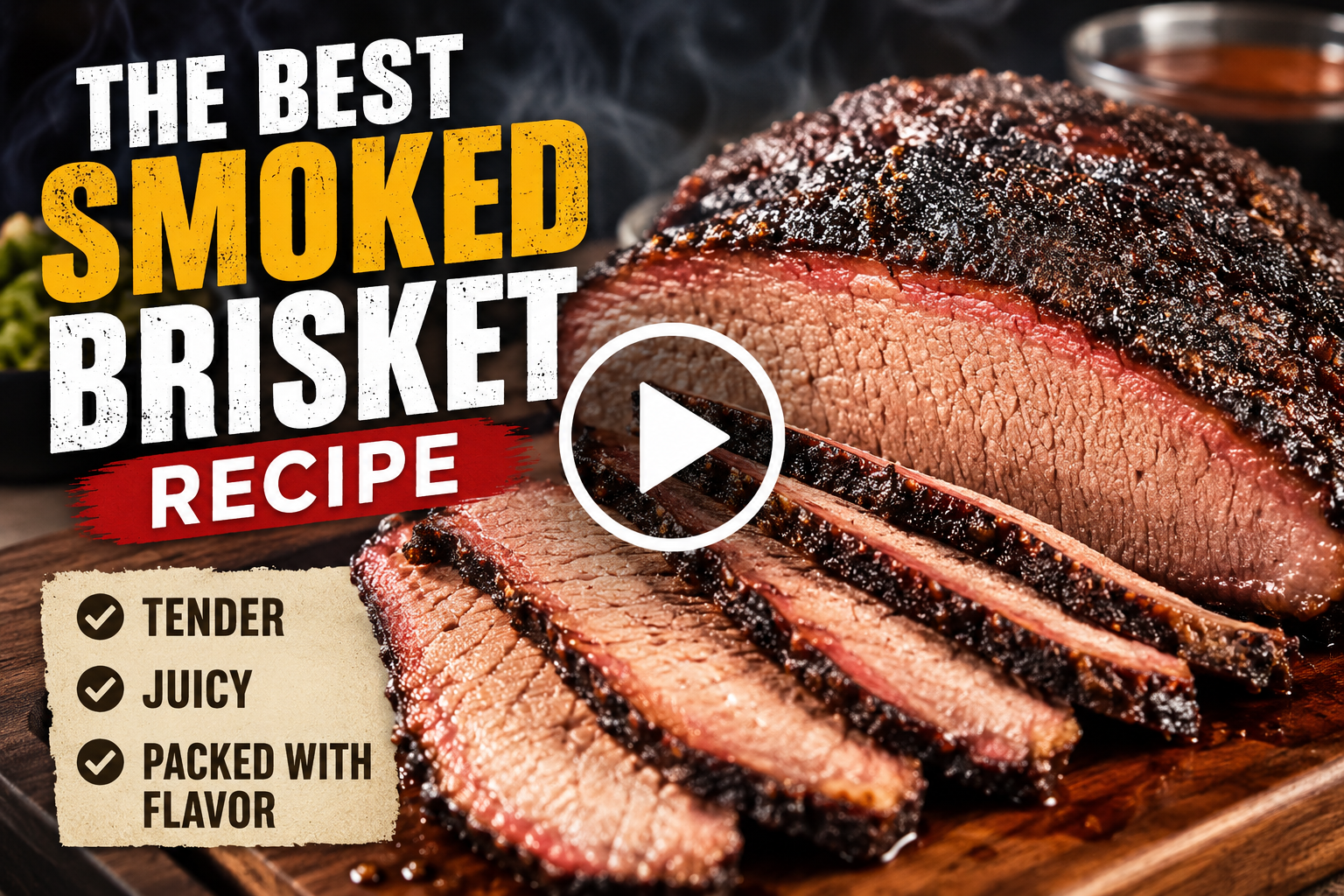
Nothing says authentic barbecue quite like a perfectly smoked brisket. With its rich beefy flavor, beautiful smoke ring, and melt-in-your-mouth texture, smoked brisket has earned its place as one of the most beloved barbecue dishes in the world. While many people believe making brisket is difficult, the truth is that anyone can create a restaurant-quality brisket with the right techniques, patience, and attention to detail.
In this guide, you’ll learn how to make the best smoked brisket recipe that delivers tender, juicy, and flavorful results every time. Whether you’re a beginner using a pellet smoker or a seasoned pitmaster working with an offset smoker, these tips will help you master the art of smoking brisket.
What Makes a Great Smoked Brisket?
A great smoked brisket has three key characteristics:
- A flavorful bark on the outside
- Moist and tender meat on the inside
- Rich smoky flavor throughout
Brisket comes from the breast section of the cow, which is a heavily worked muscle. Because of this, it’s naturally tough and requires low-and-slow cooking to break down connective tissues and transform them into tender, juicy meat.
The magic happens when the collagen slowly melts during the smoking process, creating that signature texture barbecue lovers crave.
Ingredients
For the Brisket
- 1 whole beef brisket (10–14 pounds)
- 2 tablespoons coarse kosher salt
- 2 tablespoons coarse black pepper
- 1 tablespoon garlic powder
- 1 tablespoon onion powder
Optional Spritz
- 1 cup apple cider vinegar
- 1 cup apple juice
Wood for Smoking
Choose hardwoods such as:
- Oak
- Hickory
- Post oak
- Pecan
- Mesquite (use sparingly)
Oak is often considered the gold standard because it provides a balanced smoke flavor that complements beef without overpowering it.
Choosing the Right Brisket
The quality of your brisket significantly impacts the final result.
When shopping for brisket, look for:
Good Marbling
Thin streaks of fat throughout the meat help keep it moist during long cooking sessions.
Flexible Meat
A brisket that bends easily usually contains better fat distribution and tenderness potential.
USDA Choice or Prime Grade
Prime briskets generally provide the best results due to higher marbling content.
Whole Packer Brisket
A packer brisket includes both the flat and point muscles, offering the best flavor and texture.
Preparing the Brisket
Step 1: Trim Excess Fat
Using a sharp knife, trim the fat cap to approximately ¼ inch thickness.
Remove:
- Hard fat deposits
- Loose meat pieces
- Excess silver skin
Proper trimming helps smoke penetrate the meat and promotes even cooking.
Step 2: Apply the Rub
Mix:
- Kosher salt
- Black pepper
- Garlic powder
- Onion powder
Generously coat the brisket on all sides.
Many Texas pitmasters use a simple salt-and-pepper rub because it allows the beef flavor to shine.
After seasoning, let the brisket rest for 30–60 minutes while the smoker heats up.
Setting Up Your Smoker
Preheat your smoker to:
225°F to 250°F (107°C to 121°C)
Maintaining a steady temperature is one of the most important factors for smoking brisket successfully.
Popular smoker options include:
- Offset smokers
- Pellet smokers
- Kamado grills
- Charcoal smokers
- Electric smokers
Regardless of the type, consistent heat is key.
Smoking the Brisket
Step 1: Place Brisket on the Smoker
Position the brisket fat-side down if your heat source comes from below.
If heat comes primarily from above, place it fat-side up.
Insert a reliable meat thermometer into the thickest part of the flat section.
Step 2: Smoke Low and Slow
Smoke the brisket at 225°F to 250°F.
Avoid opening the smoker frequently.
Every time the lid opens:
- Heat escapes
- Cooking time increases
- Moisture is lost
Patience is crucial.
Step 3: Spritz Every Hour
After the first three hours, lightly spritz the brisket every hour using:
- Apple cider vinegar
- Apple juice mixture
This helps maintain moisture and encourages bark formation.
Understanding the Stall
Around 150°F to 170°F internal temperature, the brisket may stop rising in temperature for several hours.
This phenomenon is called “the stall.”
Many first-time brisket cooks panic at this stage, but it’s completely normal.
During the stall, moisture evaporates from the meat’s surface, cooling it similarly to sweat evaporating from your skin.
Wrapping the Brisket
Once the brisket reaches approximately 165°F and develops a dark bark, wrap it tightly.
Wrapping Options
Butcher Paper
Pros:
- Preserves bark texture
- Allows some airflow
- Traditional Texas method
Aluminum Foil
Pros:
- Speeds cooking
- Retains moisture
- Easier for beginners
Place the wrapped brisket back into the smoker and continue cooking.
Cooking to Perfect Tenderness
Continue smoking until the internal temperature reaches:
200°F to 205°F
However, temperature alone doesn’t determine doneness.
The real test is tenderness.
Insert a temperature probe into several areas of the brisket.
If it slides in like warm butter, the brisket is ready.
The Most Important Step: Resting
Many people ruin a perfectly cooked brisket by slicing it immediately.
Resting allows juices to redistribute throughout the meat.
Resting Method
- Remove brisket from smoker.
- Keep it wrapped.
- Place in a cooler or insulated container.
- Rest for 1–4 hours.
Longer resting times often produce even better results.
This step can dramatically improve tenderness and juiciness.
How to Slice Brisket Properly
Improper slicing can make even a perfectly cooked brisket seem tough.
Separate the Flat and Point
The grain direction changes between these muscles.
Slice Against the Grain
Cut thin slices approximately pencil-width thick.
Slicing against the grain shortens muscle fibers and improves tenderness.
For the point section, slightly thicker slices work well.
Serving Suggestions
Smoked brisket pairs beautifully with classic barbecue sides.
Popular options include:
- Coleslaw
- Baked beans
- Potato salad
- Cornbread
- Mac and cheese
- Pickles
- Grilled vegetables
For a Texas-style experience, serve brisket with:
- White bread
- Pickles
- Onions
- Barbecue sauce on the side
Common Brisket Mistakes to Avoid
Cooking Too Hot
High temperatures can dry out brisket before collagen has time to break down.
Skipping the Rest
Resting is essential for maximum juiciness.
Underseasoning
Brisket is a large cut of meat and requires generous seasoning.
Slicing With the Grain
This creates chewy, stringy slices.
Constantly Opening the Smoker
Every peek extends cooking time and disrupts temperature stability.
How Long Does It Take to Smoke a Brisket?
A general guideline is:
1 to 1.5 Hours Per Pound
For example:
- 10-pound brisket: 10–15 hours
- 12-pound brisket: 12–18 hours
- 14-pound brisket: 14–21 hours
Weather conditions, meat thickness, and smoker type can affect cooking time.
Always cook based on tenderness rather than strict timing.
Storing Leftover Brisket
If you have leftovers, store them properly to preserve flavor.
Refrigerator
Store in an airtight container for up to 4 days.
Freezer
Vacuum-sealed brisket can remain frozen for up to 3 months.
Reheating
For best results:
- Wrap in foil
- Add a small amount of beef broth
- Heat slowly at 275°F
This prevents the meat from drying out.
Why This Is the Best Smoked Brisket Recipe
This recipe consistently delivers:
- Deep smoky flavor
- Beautiful bark
- Tender texture
- Incredible juiciness
The combination of simple seasoning, controlled temperature, proper wrapping, and adequate resting creates a brisket that rivals top barbecue restaurants.
Unlike overly complicated recipes, this method focuses on proven barbecue fundamentals that produce reliable results every time.
Final Thoughts
Smoking brisket is more than a recipe—it’s an experience. While it requires time and patience, the reward is a spectacular centerpiece worthy of family gatherings, backyard parties, and special occasions.
By choosing a quality brisket, maintaining a steady smoker temperature, wrapping at the right time, and allowing a proper rest, you’ll create tender, juicy, and flavorful brisket that impresses everyone at the table.
The next time you’re craving authentic barbecue, fire up your smoker and try this recipe. With practice and patience, you’ll soon be serving the best smoked brisket your friends and family have ever tasted.